

Rally1 was not brought down by a lack of ambition.
It was brought down by a mismatch between technical intent, operational reality, and boardroom expectations.
From a pure concept standpoint, Rally1 promised a compelling narrative: hybrid technology, sustainability messaging, and a clear technological step beyond Rally2. In theory, it offered manufacturers a story that could connect motorsport, road relevance, and future-facing brand positioning.
In practice, that connection never materialised.
What Boards Actually Evaluated
Manufacturer boards did not look at Rally1 only through performance or spectacle. They evaluated it through three lenses:
- Road-car relevance
- Brand and marketing leverage
- Risk exposure versus reputational return
This is where Rally1 began to fail, not emotionally, but structurally.
The Hybrid Promise That Never Reached the Road
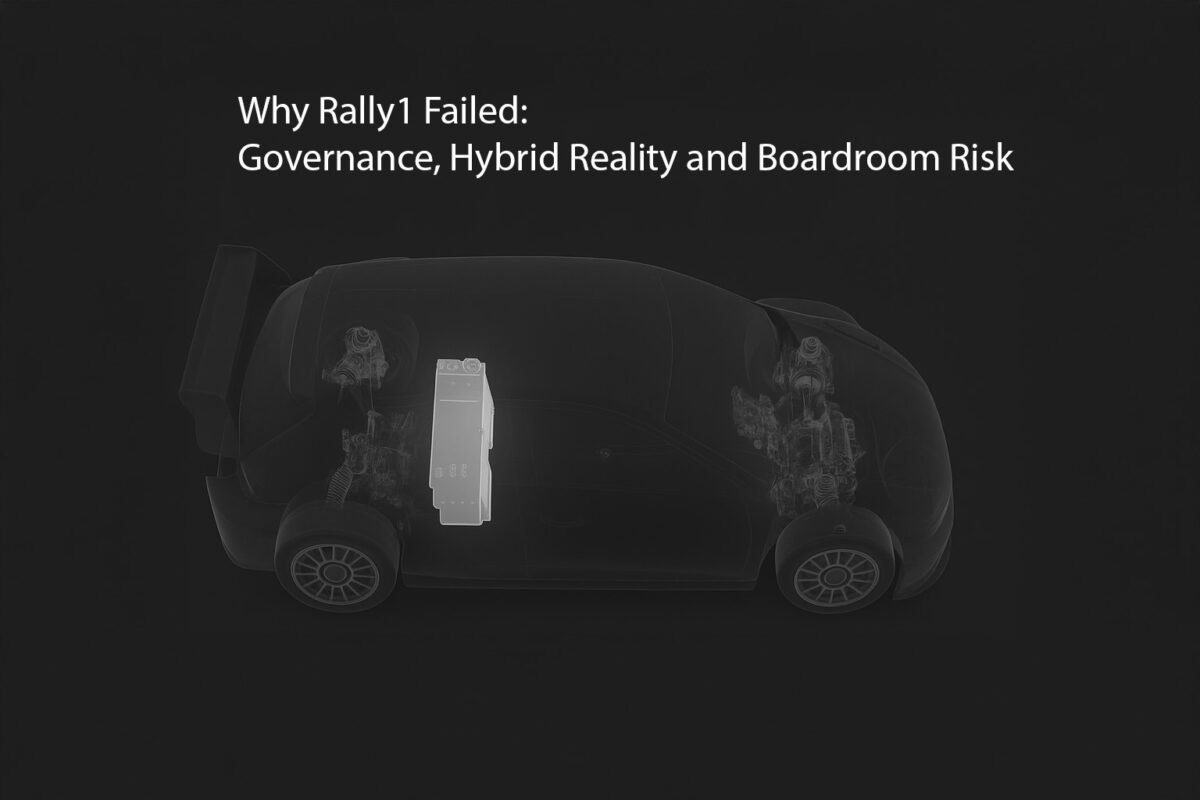
The introduction of hybrid technology was intended to serve a clear purpose: demonstrate relevance to electrified road cars and provide a visible sustainability narrative.
That purpose was never fulfilled.
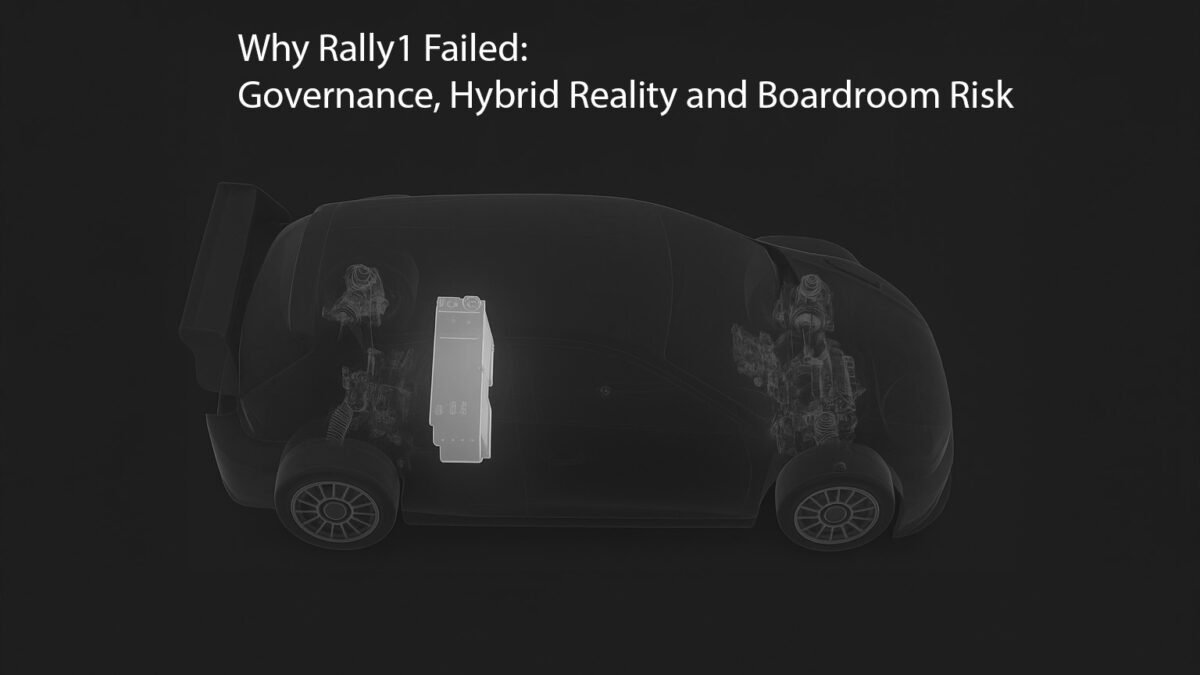
The Rally1 hybrid system:
- had very limited electric range
- could not support electric-only road sections
- delivered value almost exclusively within stages
- offered no meaningful customer-facing story
For marketing departments, this created an immediate problem. The hybrid system existed, but it could not be convincingly translated into showroom relevance or consumer understanding.
What was designed as a brand bridge became an internal explanation exercise.
When Reliability Becomes Political Risk
The hybrid system did not fail only because it was complex.
It failed because its operational instability directly affected sporting outcomes.
System failures:
- cost drivers stage time and positions
- forced retirements unrelated to driver or car performance
- created inconsistent competitive conditions
At board level, this is unacceptable. Motorsport can tolerate mechanical risk; it cannot tolerate externally imposed, uncontrollable risk that undermines credibility.
Once results are influenced by a controlled-spec hybrid system rather than team execution, the political defence of the program collapses.
Supplier Fragility Exposed the Entire Concept
By the final phase of Rally1, the hybrid ecosystem itself became a liability.
- Units were expensive
- Replacement availability was limited
- Some teams faced events without guaranteed backup systems
- A single supplier failure translated into championship-wide risk
This is a critical governance failure.
When a top category depends on a single technical supplier that cannot guarantee continuity, boards no longer see innovation — they see systemic exposure.
Why Cost Was the Multiplier
High cost alone does not kill motorsport programs.
Unpredictable cost does.
Rally1 combined:
- bespoke chassis
- complex hybrid systems
- supplier dependency
- limited scalability
- declining manufacturer participation
Each season increased sunk cost while reducing flexibility. Exit became politically painful, but continuation became harder to justify.
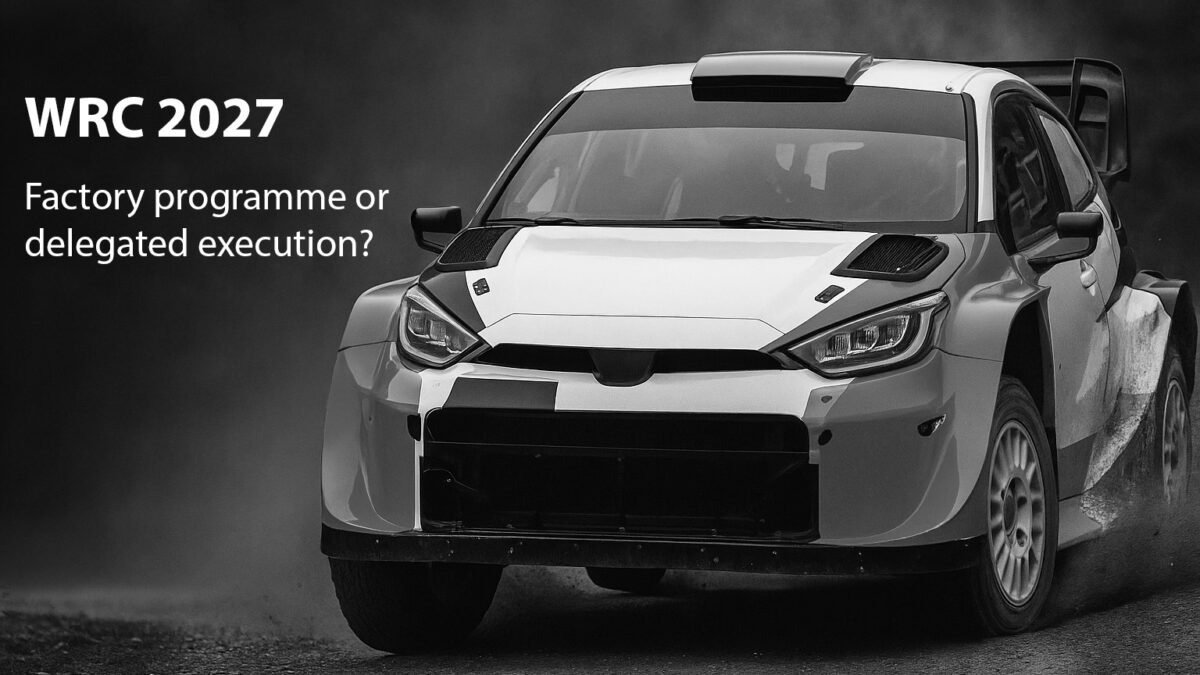
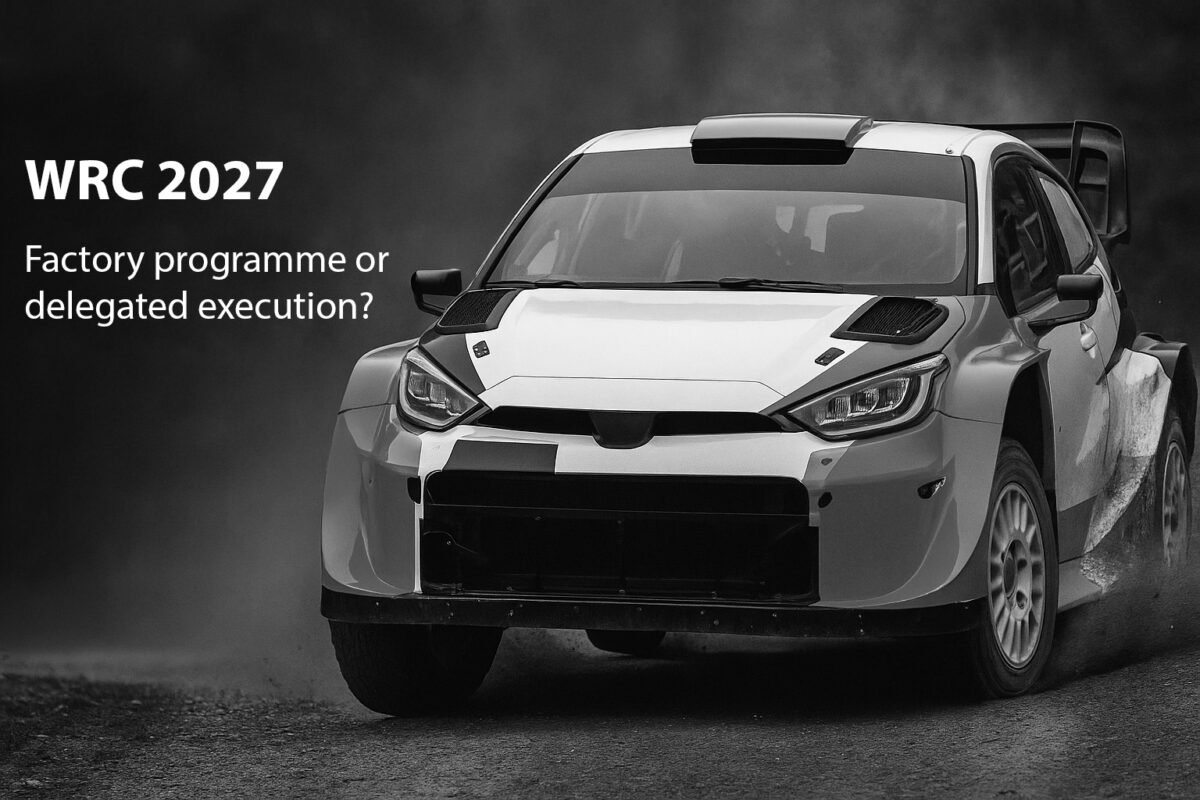
WRC27 Is Not a Nostalgic Move
WRC27 is not about “going backwards.”
It is about restoring characteristics boards require to approve participation:
- cost legibility
- operational robustness
- supplier resilience
- clearer marketing translation
- controlled downside risk
This is not a technical downgrade.
It is a governance reset.
The Uncomfortable Truth
Rally1 did not fail because hybrid technology is wrong for rallying.
It failed because the execution delivered neither reliable sporting integrity nor credible road relevance, while amplifying cost and political exposure.
That combination is fatal at board level.
Implication
Future top-category regulations will only survive if they align three things simultaneously:
- what engineers want to build
- what marketers can explain
- what boards can defend when things go wrong
Ignore any one of these, and the regulation will fail — regardless of how impressive it looks on paper.
Nine.Vision Insight:
Motorsport programs collapse not when technology is ambitious, but when it becomes indefensible.